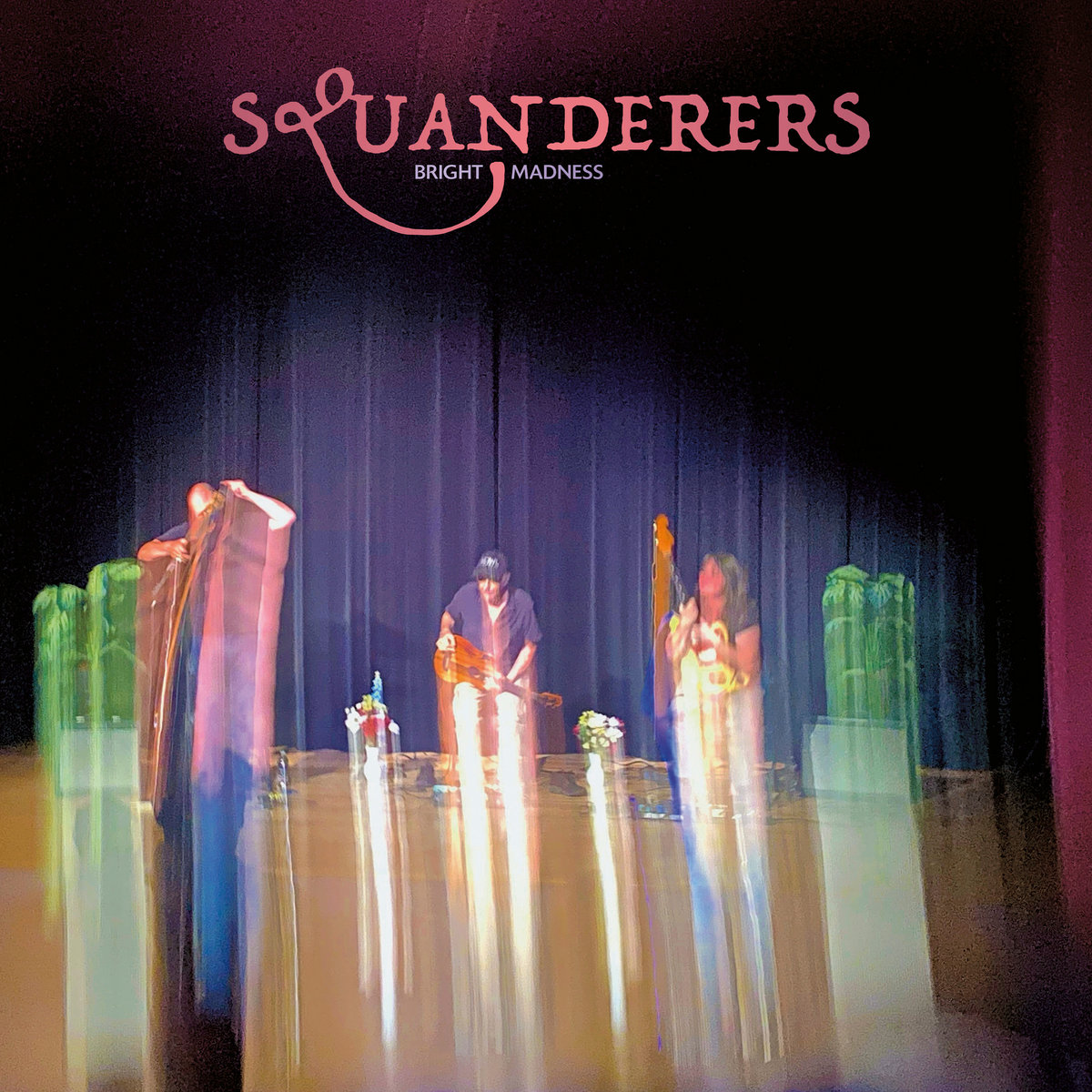
SQUANDERERS "Bright Madness"
Bright Madness is the third album from the pinch-me-is-this-real improvising trio of Wendy Eisenberg, David Grubbs, and Bonner Kramer. Fresh off their 2025 Big Ears appearance, SQUANDERERS slid on over to Kramer’s adopted hometown of Asheville, North Carolina and laid down the glorious afternoon’s worth of instant compositions that stands before you. It’s the sound of Eisenberg, Grubbs, and Kramer doing their damnedest to dazzle one another, from shell-game sleights of hand to the effortless beauty of “Theme for the Casino at 5 A.M.,” from the ratcheting up of tension and general plot thickening of “Theme for Femme-Presenting Hands” and “Theme for the World’s Consigliere” to the epic “Theme for Nihologisms,” which hints at the scale of SQUANDERERS’ live performances.
In a recent cover feature on Wendy Eisenberg in The Wire, Grubbs described SQUANDERERS as “a dream of a trio, something that I always hoped I might find in an improvising group. Part of me wants to chalk it up to attitude — Wendy and Kramer having serene confidence in what they produce in real time — but it also has to do with their consummate skills as musicians. The wild, uninhibited flow of ideas from Wendy I’ve experienced when we’ve played as a duo slows down and floats in amber with SQUANDERERS.” Wendy’s take on SQUANDERERS from the same feature? “It’s the most beautiful mermaid shit I’ve ever heard in my life.”
Bright Madness follows If a Body Meet a Body and Skantagio, two full-length SQUANDERERS offerings on Kramer’s Shimmy-Disc label. As Raphael Helfand concluded in his Pitchfork review of If a Body Meet a Body, “What we’re left with is not so much a pristine work of collective genius as a testament to the transcendence that can occur when a group of individual geniuses sit down together with no greater aim than melding their minds for a while. If only all our squanderings could be so fruitful.”
Wendy Eisenberg is an improviser and songwriter who uses guitar, pedals, the tenor banjo, the computer, the synthesizer, and the voice. Their work spans genres, from jazz to noise to avant-rock to delicate songs; their performances span venues, from international festivals to intimate basements. Though often working solo as both a songwriter and improviser, they also perform in the rock band Editrix, and in endless other combinations of their heroes and peers including Bill Orcutt, Caroline Davis, Ryan Sawyer, and John Zorn.
David Grubbs has released sixteen solo albums and was a member of the groups Gastr del Sol, Bastro, and Squirrel Bait. He has performed with Tony Conrad, Pauline Oliveros, Luc Ferrari, Susan Howe, Will Oldham, the Red Krayola, and many others. Grubbs is the author of numerous books including Good night the pleasure was ours, The Voice in the Headphones, Now that the audience is assembled, and Records Ruin the Landscape: John Cage, the Sixties, and Sound Recording.
Bonner Kramer is a composer/musician/filmmaker and multi-instrumentalist who has worked with artists as diverse as John Zorn, Butthole Surfers, Bill Frisell, Ween, The Fugs, Thurston Moore, Penn Jillette, Allen Ginsberg, Jad Fair, and Laraaji, to name but a few. He is also a renowned record producer (Galaxie 500, Low, Daniel Johnston, Will Oldham, etc.) and the founder of the iconic NYC record label, Shimmy-Disc. He rarely performs onstage, and SQUANDERERS is his first long-term recording project to include live performances since 1999. He currently lives and works in the
Appalachian temperate rainforest.
CAN "LIVE IN ARLES 1975"
LIVE IN ARLES 1975 is the seventh album in the acclaimed live series from German experimental rock pioneers CAN, overseen by founding member Irmin Schmidt and released on Mute.
Widely regarded as one of their finest performances, even by the band members themselves, this concert took place at the Roman Théâtre Antique in Arles. The lineup consisted of the core four members: Schmidt, Michael Karoli, Jaki Liebezeit and Holger Czukay. The band played as part of a festival that included other artists such as Nico and Kevin Ayers.
The recording was unearthed from the Spoon Records vaults, after long only existing through the stories of those who were there. To celebrate its first release, it feels only fitting that the sleeve notes include first-hand accounts from people who attended the show.
As with the rest of the series, this release captures the unique nature of CAN’s onstage improvisations. Every show was different, and these recordings offer a fresh look at a band whose creative process never truly finished.
Defecting Grey "Pivotal"
From Add To Want List:
”
New Jersey trio Defecting Grey released their new album on Fake Chapter Records this week. I’m fairly certain this is the first record of theirs I’m hearing, but they already have a debut album and a couple of EPs in their discography. Anyhow, Pivotal? That’s a pretty cool record.
Defecting Grey play like they grew up on college rock and punk rock, then decided to steal Bob Mould’s blueprints for writing powerful alternative rock. They also admit to liking their AOR and power pop, and true to their name, those influences color their music in unexpected ways.”
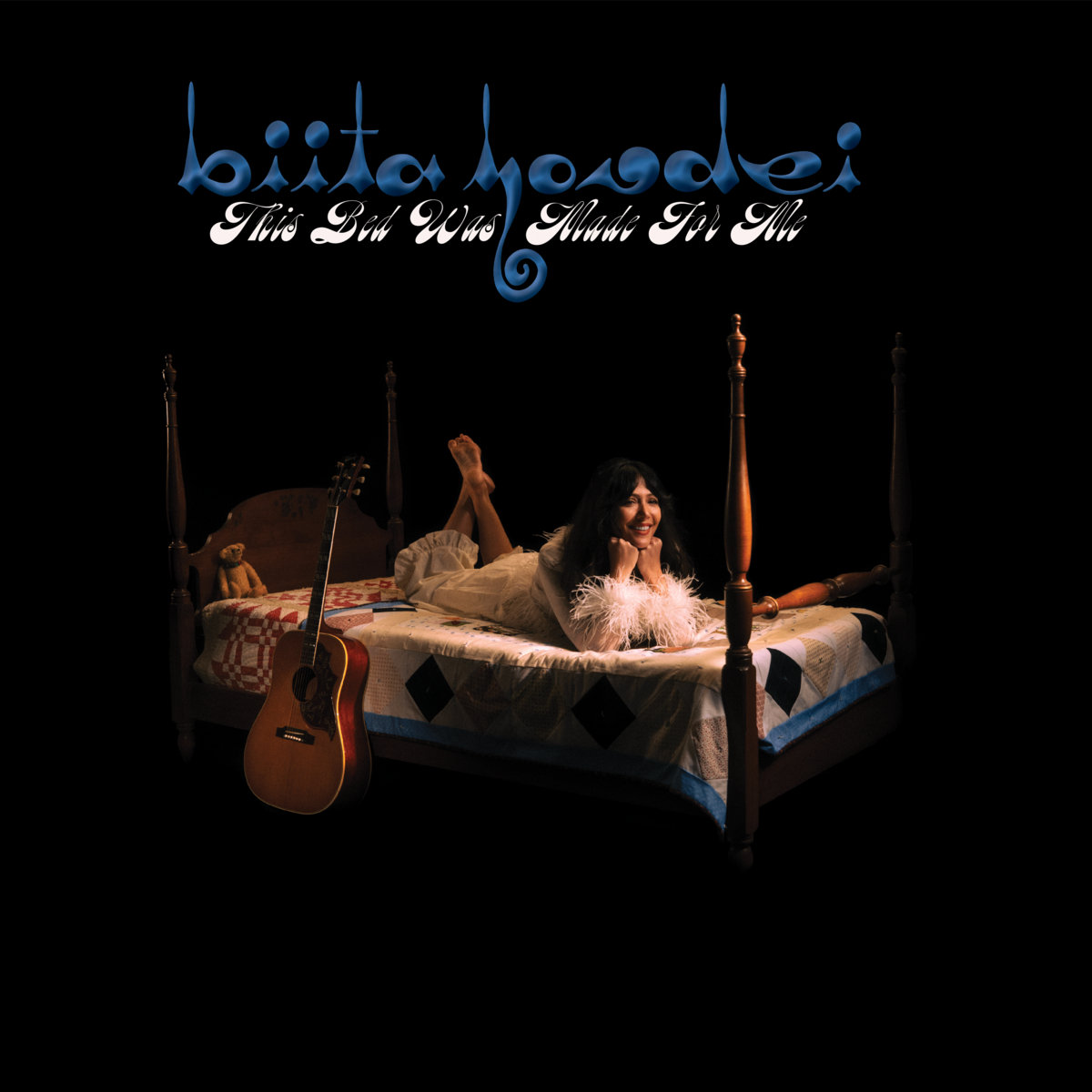
Biita Houdei "This Bed Was Made For Me"
From Father Daughter Records:
”
This Bed Was Made For Me is a striking collection of Biita Houdei’s (pronounced “bee-tah who-day”) stirring, signature folk songs, brought into fruition with the help of fellow songwriter Haley Heynderickx, in her first lead production role, and the album’s producer/engineer Sahil Ansari. It’s first release Biita is releasing under her newly-taken name, one that was gifted to her by her auntie and means “unique” in the Farsi language. Recorded across ten back-to-back and full days, which began with fermented tea and ended with a shared meal together, the album touches on themes of love and heritage, of taking chances, the preciousness of time and the impact we all have on the world around us.
It’s a defined moment that brought Biita and Haley together in the physical space, although Haley’s presence drifts through the recordings in a variety of means and ways. Guided by trust and intuition, it’s a relationship some 8 years in the making, the two becoming friends after Biita opened a show for Haley back in 2018. Ahead of their work here, the two went on a writing retreat together, staying in their own small campers in rural Oregon, and they replicated this cosiness for the studio setting too, seeking out a space that embraced both quiet solitude and human connection.
This close sense of comradery is ever-present on This Bed Was Made For Me. Light and laughter dance their way through the recordings, even when the subject matter veers towards its darker corners. The album feels lived in and alive; dust swirls, seasons shift, sunshine appears and is held.
Opening track ‘The Ground Here’, which features Big Thief’s Buck Meek, showcases such aesthetics, the playful idiosyncrasies of the instrumentation allowing Biita’s voice to run wild and free among the scorched grasslands she sings of, the lush rivers she’s left behind. The song is shaped by the generous meeting of Biita and Buck, their voices woven together in beautiful harmony, a dance that is repeated throughout the album and brings the whole thing to life – whether it’s Haley’s voice drifting in or Biita’s own layered vocals.”