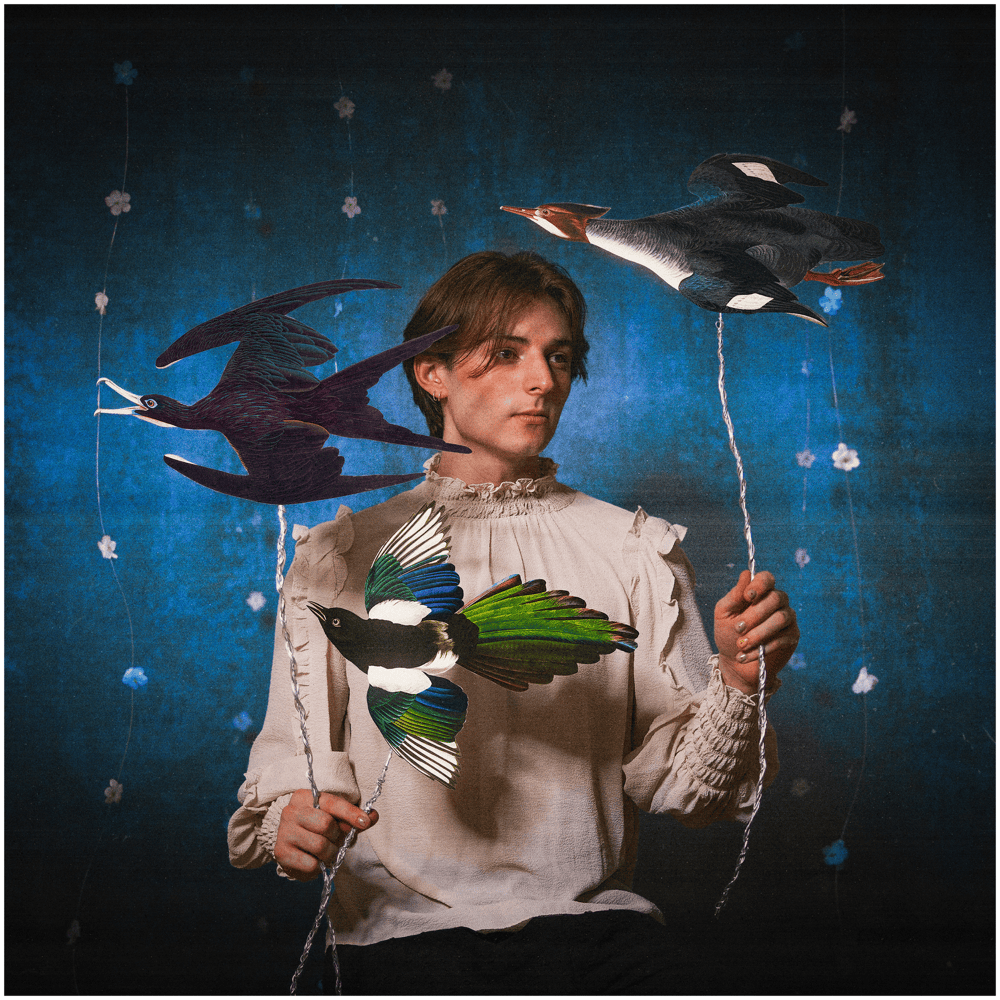
Ryley Tate "Hurry, I’m Gone"
“Finch Song”, the first single off Ryley Tate’s debut EP Hurry, I’m Gone, is out now!
“Finch Song” is a poem I wrote while walking downtown Boston in the Spring, and seeing the birds return to their regularly scheduled activities of pecking and fluttering down the street. It had been gray and cold for months, and this was the first time it felt happy outside in a long while. – Ryley Tate
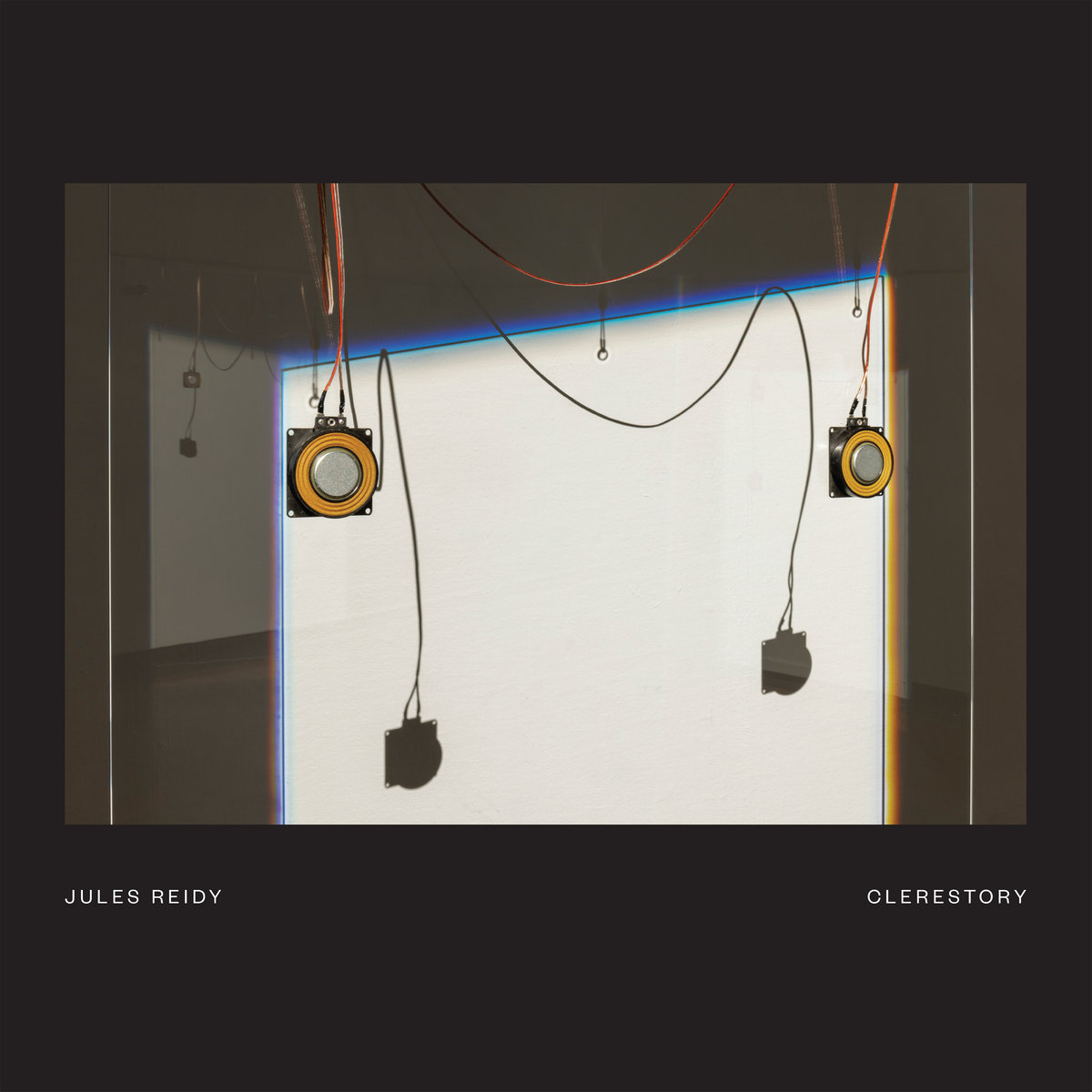
Jules Reidy "Clerestory"
A clerestory—etymologically a bright or ‘clear’ level or ‘storey’—is an upper section of wall, most often in a church, punctuated by windows. It is a powerful image for grasping this luminous new music from Jules Reidy, which presents a side of their work quite distinct from the dense song-constructs of their Thrill Jockey debut Ghost/Spirit. Light casts shadows, of course, and logics of shadowing, mirroring, and distorted reflection—of key importance for Reidy’s work as a whole—inform the sumptuous surfaces of Clerestory and the interplay between its two contrasting sides.
“Shadow Symmetric” is a string quartet commissioned by the celebrated JACK Quartet as part of their JACK Studio program. Reidy’s pairing with the quartet is felicitous: JACK are one of the preeminent new music ensembles working today, with a particular interest in just intonation, for many years an important component of Reidy’s music. The piece makes simultaneous use of two pitch sets, beginning from the same starting point but expanded using different scaling to produce what Reidy describes as “two offset spectral layers.” The two sets of intervals are close, but not identical; when heard together, they produce uncanny effects of near-unison, of perfect consonance grasped in a warped reflection. The piece’s gentle pacing and constrained dynamic range invites us to become immersed in its distinctive language of static resonance, complex beating tones, and subtle harmonic surprise. It is primarily a music of harmony, but rhythmic organisation is key to its effect: arranged as successive harmonic blocks that at times overlap, with staggered introductions of the quartet’s four voices often serving to key the listener’s attention into the blurring of the near-unison pitches, the music moves with the stateliness of an early Baroque chorale. Through it, there threads a melodic theme, passed between instruments and tuning systems, almost at the threshold of perception but with the same yearning quality familiar to listeners of Reidy’s guitar works.
On the flipside, “Clerestory Windows” offers up a distorted mirror image of the string quartet, arranged as a series of episodes that each remake the material in their own way, as if seen through individual panes of stained glass. It begins with an arrangement of the string quartet material for MIDI strings and voices, repositioning its rigorous harmonic exploration somewhere between the Lovely Music Ltd universe and a 90s RPG soundtrack. This episode derives from Reidy’s installation Inside, Crystals and Circuitry, held in Stockholm in 2025, made up of multi-channel sound broadcast by transducers in suspended sheets of glass illuminated by spotlights, producing a mysterious effect where shadows appear more palpable than the sheets themselves. The piece moves into a lyrical 12-string acoustic guitar air performed at the installation opening, before the strings from the first side reappear, now frozen and stretched into slow-moving waves, with electric guitar tones rippling across. From this emerges flickering arpeggios, achieved by arranging the string quartet material for the RMI, an early digital synthesizer. This cues a move into more active terrain, preparing the way for the delirious final episode, where the string quartet material is re-arranged once more, this time for staccato patterns of stuttering electric guitar notes, eventually giving way to spacious chords shadowed by a pair of ringing sine tones. Like all of Reidy’s music, Clerestory is no mere formal exercise, but a meditation on fundamental dynamics of human experience: orientation and disorientation, the hazy borders between the material and the spiritual, and the instability of identity.
7ebra "How to land a plane"
There’s no handbook for your mid-to-late twenties. Who you are, what you want and where you should be by now are mysteries that you can only assume everyone else has the answers to while you stumble around like an idiot. For twin sisters Inez (vocals/guitar) and Ella Johansson (vocals/keys/drum machine) of 7ebra, it can feel like trying to land a plane with no instructions: you grasp for the right controls and hope you don’t crash the whole thing. It’s a feeling captured across the Malmö duo’s second album, How to Land a Plane. Atop their hookiest and most layered songwriting so far, they chew over the insecurities, frustrations and embarrassments of this stage of life. “It’s about feeling a bit messy, and not getting it right. Having a struggle just existing with yourself,” Inez says.
Growing up in a musical household in Malmö, Inez and Ella pursued their own musical paths, keen to keep their identities separate. “When you’re growing up [as twins], you want your own personality sometimes. It feels like you’re clumped together,” Inez says. 7ebra began as a bedroom solo project of Inez’s; but when she was asked by producer Tore Johansson (The Cardigans, Franz Ferdinand) to play her first show at Tambourine Studios in Malmö, she brought Ella on board for musical backup. The sisters soon found that they worked well together, sibling bickering aside. “If I were to write with someone else, it would feel very scary to me,” Inez says. “We’re not afraid to say if we don’t like something — it’s very open.”
The duo went on to record their 2023 debut album, Bird Hour, with Tore. It was released to attention from the likes of Pitchfork and DIY Magazine and a victorious touring cycle including trips to the UK, US and Japan, appearances at End of the Road Festival and SXSW, and support slots for the likes of Paolo Nutini and Arab Strap. The sisters finished the cycle with a newfound confidence in their music. But when trying to write for a new record, they found themselves in a slump. “I feel like Inez especially felt a lot of pressure,” Ella says. Inez agrees: “I was very stuck, and you can’t really write if you’re not living in the world.” It changed when she got a job as a cemetery groundskeeper, ending a long spell of unemployment. “It’s a very slow job, so you think a lot, and that’s when I started to write again,” she says.
Tore Johansson was by now living in Portugal, but he introduced the sisters to his friend, fellow Malmö producer Jens Lindgård. Lindgård became a vital partner in the writing process, helping to flesh out and complete the songs that Inez and Ella were bringing to him. Lindgård encouraged them not to worry about how they would recreate songs live, instead pushing them to use the studio and follow their instincts. He became an emotional cheerleader, too: “If something goes wrong we can get kind of low and insecure. But he’s like, ‘Stop!’ He’s been good at picking us up,” Ella says.
The songs on How to Land a Plane are more extroverted than the insular and shrouded sounds on Bird Hour, full of buzzing synths, insistent drums and infectious hooks. “I think we wanted to have more fun onstage,” Inez says. The effect can be to create a winking irony in songs that are dark and sad at their core. On the chorus of “Dinner and a Movie”, for example, a song that’s about the shame and regret after coming out of a party hole, the sisters sing “I’m seeing stars everywhere” as if it’s the effects of romance they’re feeling rather than too much booze. Meanwhile, on “Normal Song” — “a pop song about writing a normal song in which you wanna cry in an open field” — they make the words “I wanna cry in an open field” sound positively aspirational.
The disturbing effects of capitalism on the experience of young adulthood are present across the album. “It’s really hard to find a job and an apartment these days. I feel like you’re younger kind of longer,” Inez says. “I need an education / Particular set of skills / Still living at my mother’s / Got nothing to bring to the table, I’m sorry,” she sings, paraphrasing Liam Neeson in Taken, on “I Have To Buy Stuff,” a track about simultaneously being exhausted with consumerism and feeling a perverse desire to keep consuming. On “Bored Like A Dog”, she sings about the indignity of mindless work, the song building to a fuzzed-out crescendo against droning vocals. The duo were inspired by the late-capitalism satire of the TV show Severance, something which shows up again in “Night Smog” — a short and eerie track that combines Severance imagery with that of a mysterious pharmaceutical lab near their home in Malmö.
Other songs are deeply introspective. On “Forming”, Inez channels her love of Elliott Smith, with double-tracked vocals and haunting melodies. It’s a sister song to “Dinner and a Movie”, about shame and desperation. “The night turns me pathetic / Predator losing teeth,” she sings. “Lime Green Jello” is similarly subdued; it was one of the songs that resulted from Inez’s job at the cemetery, overthinking while she pulled up weeds and cleaned gravestones. “I get stuck in loops, examining my personality and identity, which is very frustrating and doesn’t really do anything good,” Inez says. “[It’s about] obsessing over how you might be perceived, comparing yourself to others you think are more likeable, becoming jealous and insufferable. The conclusion is I’m just a person with nothing exciting or original to say sometimes.” “Patient Boy,” meanwhile (the title a reference to Fugazi’s “Waiting Room,” which is also referenced on “I Have To Buy Stuff”) sets gently plucked guitar against a soft, delicate vocal performance, as Inez narrates a relationship challenged by mental health struggles. “I wanna love you in a different way,” she concludes.
Across the record, as the sisters navigate the onset of adulthood in an inhospitable world together, they seem to merge and blur; voices bouncing off of each other, instruments trading lead. It’s the sound of two people who understand each other better than anyone, and a unique creative partnership coming into its own. How to Land a Plane marks 7ebra as one of the most exciting bands to break through from Sweden’s indie scene in some time.
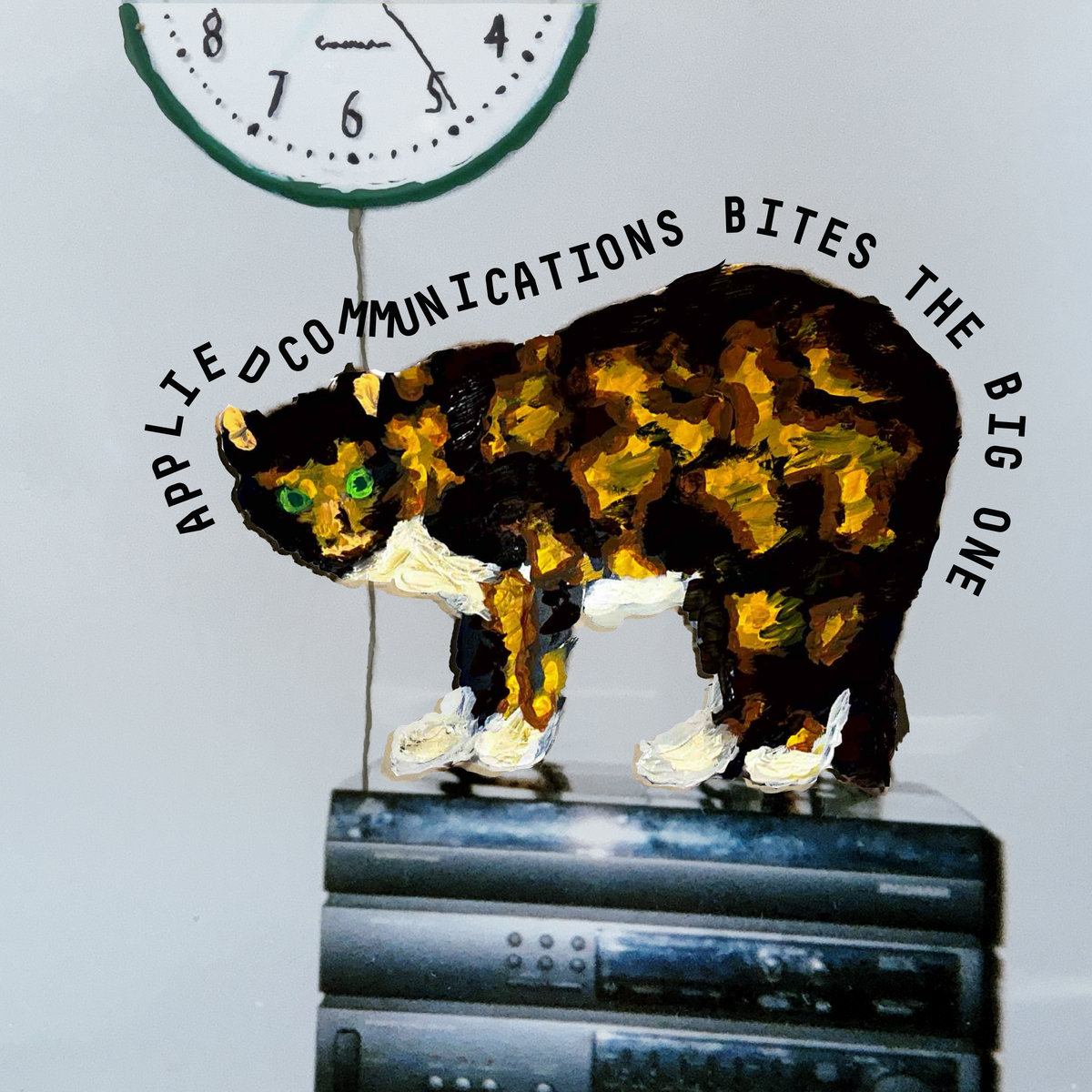
applied communications "applied communications bites the big one"
From Analogue Trash:
“The song, from the upcoming album, applied communications bites the big one, has a basis in reality, from Wood’s own childhood, in fact. “In 1998, as a 12-year-old, I spent a weekend with my uncle’s very eccentric, mysteriously wealthy, much older girlfriend. Just me and her. We watched the Olympics, ate ice cream, made an eBay page, and she somehow had a literal star named after me.”
“I had free rein in the pool house and play house. The play house had ska-friendly checkered floors and ‘this is your brain on drugs’ posters on the walls. The pool house had a water bed.”
Continues Wood about the album, his first in two decades, and the song’s place within it, “Making this record, I found myself meditating on a bunch of oddball childhood memories, and then drawing connections to all the problems and neuroses that drag me down today. (As well as all the weirdness and wonder that lifts me up!)”
“Along those lines, this track connects the alienation I feel around younger people today with the alienation I used to feel among older people, over a bed of 909 bossa nova beats, pitch-bent flutes, and warped saxophones.”