
Terror "Pain Into Power"
For two decades Terror have been relentless. The band has achieved a kind of longevity that’s exceedingly rare, managing to stay both consistently active and consistently ferocious–a feet that’s taken them from their underground roots to being one of the most legendary groups in hardcore. Now on their eighth studio album, Pain Into Power, the band have bridged the gap between their past and present, with original guitarist Todd Jones returning to the fold to produce an extraordinarily visceral record that proves Terror’s future is looking as fast, heavy, and aggressive as ever.
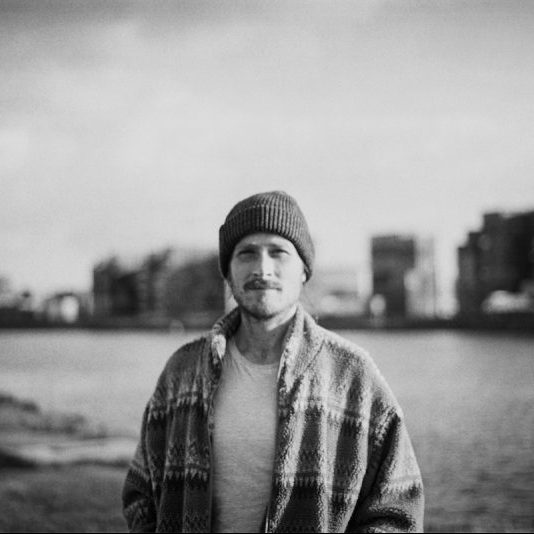
Hayden Calnin "Something/Anything"
“‘(Something/Anyhting) is an EP that is bringing some never released tracks back to life. I chose to put all these songs together to show what can be lost musically and because they sat around the same key, so it flowed into what hopefully sounds like one big journey of a song,’ Says Calnin Hayden.
Hayden released his latest album, What It Means To Be Human, in the fall of 2021. The record showcases Calnin’s growth as an artist and finds him confidently embracing orchestral-infused, progressive, cinematic folk pop into his sound. Written, recorded, and produced almost entirely by Hayden, the record is meant to be a movie score for human existence, pushing the listener to explore their place in the world and who they want to be in it. It follows recent EPs and his 2016 debut double album, Cut Love Pt. 1 & 2.”
– Michael Major, Broadway World

Gus Englehorn "Dungeon Master"
Dungeon Master, Englehorn’s Secret City Records debut, is an outsider opus that sparkles with Dada spirit — a playful juxtaposition of isolation, alienation and mildish OCD. Surprising, paranoid, and studded with synths and strings, Dungeon Master is deeper than a cellar and blunter than a club — a shivering introduction to an artist who’s finally arrived. “I let my subconscious do the driving,” Gus admits, and as you listen to these 10 tunes, it’s difficult not to do the same: to sit back like a dog with a two-legged daydream; like a fisherwoman with her net; like a snowboarder with a mouth full of powder.
Before he made the record in a cabin in the woods, he lived in Salt Lake City, Utah, where he fell in love at first sight with a woman from Québec, a girl named Estée Preda, who plays drums like Moe Tucker on salvia. In those days, Gus was a professional snowboarder — crisscrossing the world as a weird and world-class talent, kick-flipping through videos, shredding the gnar, posing in corporate-sponsored sunglasses. Before that he lived in Hawaii — on a lava field off-grid, with his folks. And before that in Alaska — in a hamlet called Ninilchik, where his parents fished for salmon and he and his brothers ate moose and pizza, played Nintendo, and also pretended to be wizards.
For almost all of Gus’s life — from Big Island’s sunsets to snowy Utah pistes — he dreamed of being a songwriter. If he couldn’t be Dylan, maybe he’d be Daniel Johnston, or Frank Black and The Pixies, or maybe Darby Crash and The Germs. And when he finally emerged — first on 2020’s Death & Transfiguration and now here on the 34-year-old’s label debut — he had found a sound that was dark and delightful, fun and demented, packed with dynamics and the chug of a hysterical guitar.

Diane Coffee "With People"
With People is both new territory for Diane Coffee, as well as a full-circle return to their roots. Shaun Fleming’s fourth album is their most intimate and personal to date, a collection of diaristic ruminations and contemplative observations of the people in their life, yet also feel universal in impact. Combining the breezy wistfulness of classic folk-rock with orchestral pop’s broad sweep, With People marks an exciting new era for Diane Coffee, chronicling an artist’s revisitation of their upbringing as they look at the horizon for what’s ahead.
The follow-up to 2019’s exquisite Internet Arms, With People came about in the early stages of the pandemic as Fleming’s songwriting took an unexpectedly personal turn. They began zooming in on not only their own emotions and experiences, but the people that have impacted their life—whether over an extended period, or through smaller, short-term interactions—many of the songs centering on a specific moment or memory from their own history. “It was a way for me to see all these people I couldn’t see, and to be with them in a time where that was impossible, in the form of song,” Fleming explains. The transportive nature of this creative process grew to encompass their upbringing in the suburbs of Agoura Hills, California, to which Fleming returned before recording as a way to recapture the feelings of their past. “Since most of the songs are about people from my hometown, I decided to fly out a week early and drive all around my old stomping grounds,” they recollect. “My school, all my childhood homes, skate spots…I took lots of pictures and even printed a few of them up to hang in the studio to keep myself in the right headspace. I wanted to feel super close to these memories.”