
Antietam "The Counting Game"
Coney Island” was recorded in 1996 by Jon Williams (deeply missed) at Vortex (East Albany, VT). The song only existed on a well-worn cassette of unreleased
material from 1996. When Jon passed away in 2024, Greg Davis connected us with the DATs from the session, going to great lengths to reunite Antietam and many others with their Vortex work, and for this we are extremely grateful.
“Way Too Well” magically appeared in a nascent form on a cassette recorded by Jeff Lazar at Brownies (in NYC) on January 25, 1997, with Antietam plus Wolf
Knapp. We totally forgot the song for almost 30 years and have reinterpreted it here. Thank you, Jeff.
We reimagined “Every Other Star” in 2024, based on a rehearsal tape recorded in 2009. Clearly, time travel is not off the table for Antietam.
© 2026 Chessie America Tunes (BMI) written by Timothy N. Harris (BMI), Tara Key (BMI) and Joshua Madell (BMI). Harris and Key administered by Rough Trade Publishing.

Upper Wilds "Mercury"
Stargazing Brooklyn noise-rock cosmonauts Upper Wilds — the power-trio led by Parts & Labor co-founder Dan Friel — return with another set of lean anthems filtered through a flamethrower. Their speediest, most explosive album yet, Mercury, is a meditation on death, with Friel expounding on his brush with skin cancer, climate change, funerals, Henry Kissinger, and a world seemingly on fire. Buoyed by recent tours with acts like Pelican, Uniform, Psychic Graveyard and Savak, the trio’s increased speed is met with a precision that gives every hairpin turn more wallop.
Upper Wilds’ space-rock adventures through their recent albums Mars, Venus, & Jupiter came replete with stories of the heavens and humanity alike. On this fourth installment, the closest planet to the sun, things take a darker turn. The small, barren planet Mercury was named after the gods’ speedy messenger and guide to the underworld, and the album syphons Upper Wilds’ fuzz-pop aesthetics into concise, scorched anthems about the brevity and fragility of life with the ferocity of a band playing on the edge of extinction.
Mercury’s molten, non-stop riffing is captured with grit and punch by engineer Travis Harrison (Guided By Voices, The Men) and is bolstered by longtime collaborator/saxophonist and fellow-New York mainstay Jeff Tobias (Sunwatchers) and vocalist Erin Dawson of LA-based experimental black metal band Genital Shame. Dawson injects more energy into the shout-chorus of the already blazing standout “Fever” where Tobias’s dizzying EWI (electronic wind instrument) on “Reaper” harkens back to Friel’s own circuit-bent synthesizer glissandos. Jason Binnick’s basslines shine brighter than before dancing in tandem with Friel’s guitar licks on “Death Song #3” and bringing equal parts melody and thunderous weight to “Green-Wood Cemetery.” Jeff Ottenbacher’s drumming oscillates between machine gun fills and sledge hammer pounding, giving each riff more momentum and bite.
As Upper Wilds have explored new horizons both thematically and sonically, the trio have remained grounded by a melodic flair that mirrors their tongue-in-cheek playfulness and an undaunted, fiery attitude. Even as they traverse the deep calderas of mortality, a fear of dying and the grief of being left behind, Upper Wilds’ Mercury revels in the thrill of defying death with ecstatic abandon.
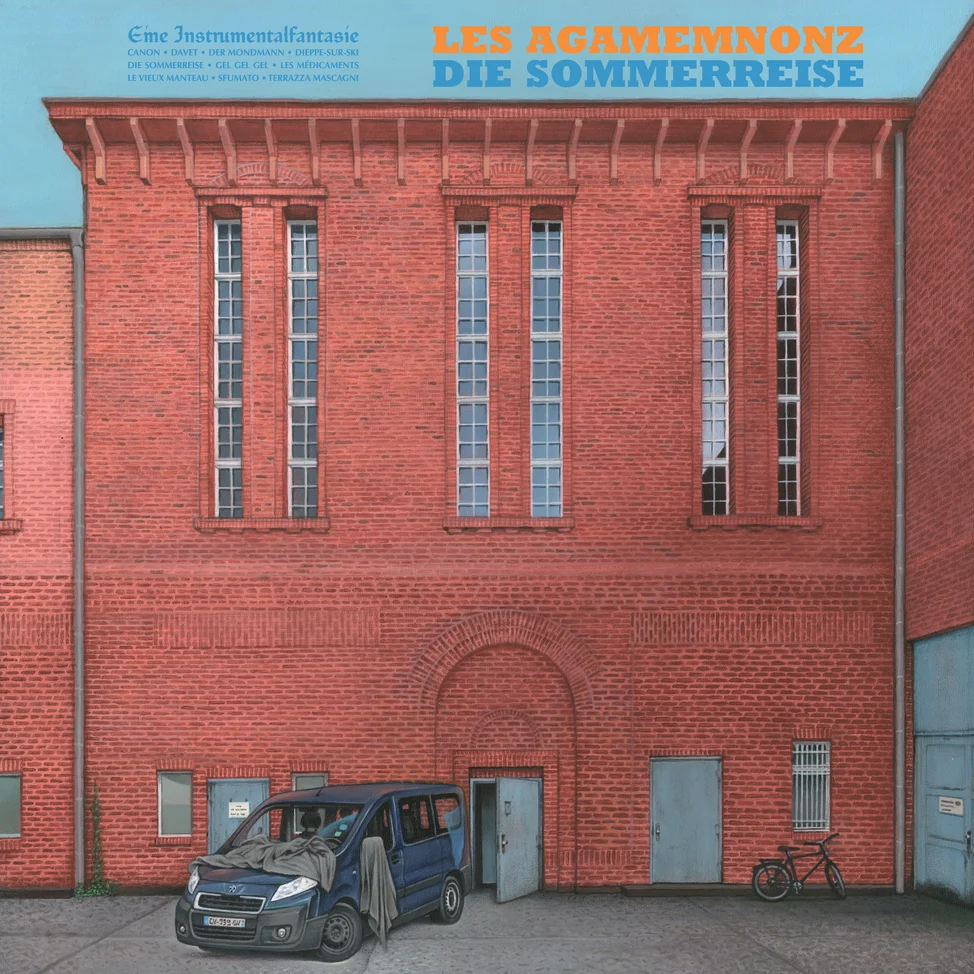
Les Agamemnonz "Die Sommereise"
Five years after their last album, Les Agamemnonz return with “Die Sommerreise” (“The Summer Journey” in German), an adventurous fourth album glowing with [here we had issue translating the word “solaire” which means solar and also bright glowing like an “aura”].
During a German tour, the band stopped in Berlin. For five days, the musicians took over a vast red-brick building, typical of the city’s eastern part, to record about ten tracks under the direction of Axel Praefcke. The Berlin-based sound engineer, who has created a kind of Sun Studio Funkhaus-style here, is known for his organic and direct approach. Everything is recorded and mixed live, in the urgency and energy of the moment: the amps are cranked up, the days stretch on, and the band’s chitons dry in the sun on the truck parked in front of the studio. Further exploring the rhythmic and structural aspects of their songs, “Die Sommerreise” revisits and reinterprets various styles often associated with the 1960s, such as the polka, the jerk, the waltz (Sfumato), the bolero, and so on. Here we find what has always been the hallmark of Les Agamemnonz: effective rhythms and audacious arrangements.
It’s worth noting that, while the group had extensively explored orchestral arrangements on their previous “Amateurs” LP by adding brass and string sections during overdub sessions, this time they experimented with a live recording of the group/orchestra encounter, everyone in the same room, the old-fashioned way. A small section was brought together, resulting, in the midst of this short, focused, and laborious week, in a kind of joyful brass band happening (Der Mondmann) but also the most “dramatic” facet of the album (Le Vieux Manteau).
The album also features several distinguished guests. Graham Mushnik (Derya Yıldırım & Grup Şimşek) joined the band in the studio, playing a rare ondioline (an early form of synthesizer popularized by Jean-Jacques Perrey) to several tracks (Davet, Gel gel gel), and Antoine Berland, an iconoclastic pianist, provides the album’s introduction using a clavicorde, an equally unique instrument. A leading figure on the international surf scene, the band distinguishes itself as much by its ability to evoke the genre’s classics – The Ventures, The Astronauts, and The Challengers – as by the originality of its songwriting.
For about seventeen years, Les Agamemnonz have performed hundreds of concerts throughout Europe and the United States. Always dressed in their Greek chitons and barefoot like the lyre player, come rain or shine, they captivate audiences of all ages and – instrumental music being what it is – without any language barrier. They sweep audiences of all ages away in sun-drenched instrumental celebrations. “Die Sommerreise” also marks the group’s second collaboration with the American label Hi-Tide Recordings, as well as with the artist Elia David, who once again created an entirely hand-painted cover, brick by brick, immortalizing this intense and fruitful stage in their grand summer voyage.
Darryl Kissick "Character Actor"
Best known as a songwriter and multi-instrumentalist in Foxwarren, Darryl Kissick has long been drawn to music that rewards patience and close listening. While his songwriting has helped shape Foxwarren’s distinctive blend of folk, psychedelia, and experimental pop, his latest solo work reveals a more meditative side.
Character Actor was born from a convergence of personal recovery and collective uncertainty. As Kissick watched Saskatchewan skies fill with smoke from northern wildfires, witnessed increasingly chaotic weather, and grappled with the political and technological forces reshaping daily life, a quiet sense of existential dread settled in. Rather than respond with louder music, he found himself drawn toward stillness.
“While feeling overwhelmed by outside forces,” Kissick explains, “I felt compelled to make something sparse and quiet.” Throughout Character Actor, peaceful ambient passages are occasionally interrupted by harsher textures, mirroring the way moments of calm are so often disrupted by the world beyond our control.
The album’s creation was also shaped by an unexpected physical setback. After injuring himself in a hockey accident, Kissick spent six weeks confined to bed recovering from surgery. Sleep-deprived and in constant pain, music initially felt impossible. As his wife brought his recording equipment downstairs so he could work from home, something unexpected emerged: instrumental compositions began flowing naturally. “Perhaps I lacked the capacity to worry about words and melodies,” he reflects. “Whatever the case, working on this album helped bring me calm and gave me a sense of purpose.”
The resulting collection trades lyrics for atmosphere, unfolding through ambient textures, tape-warped soundscapes, fluttering acoustic guitars, and quietly cinematic arrangements. There are echoes of experimental folk, minimalist composition, and classic ambient music.
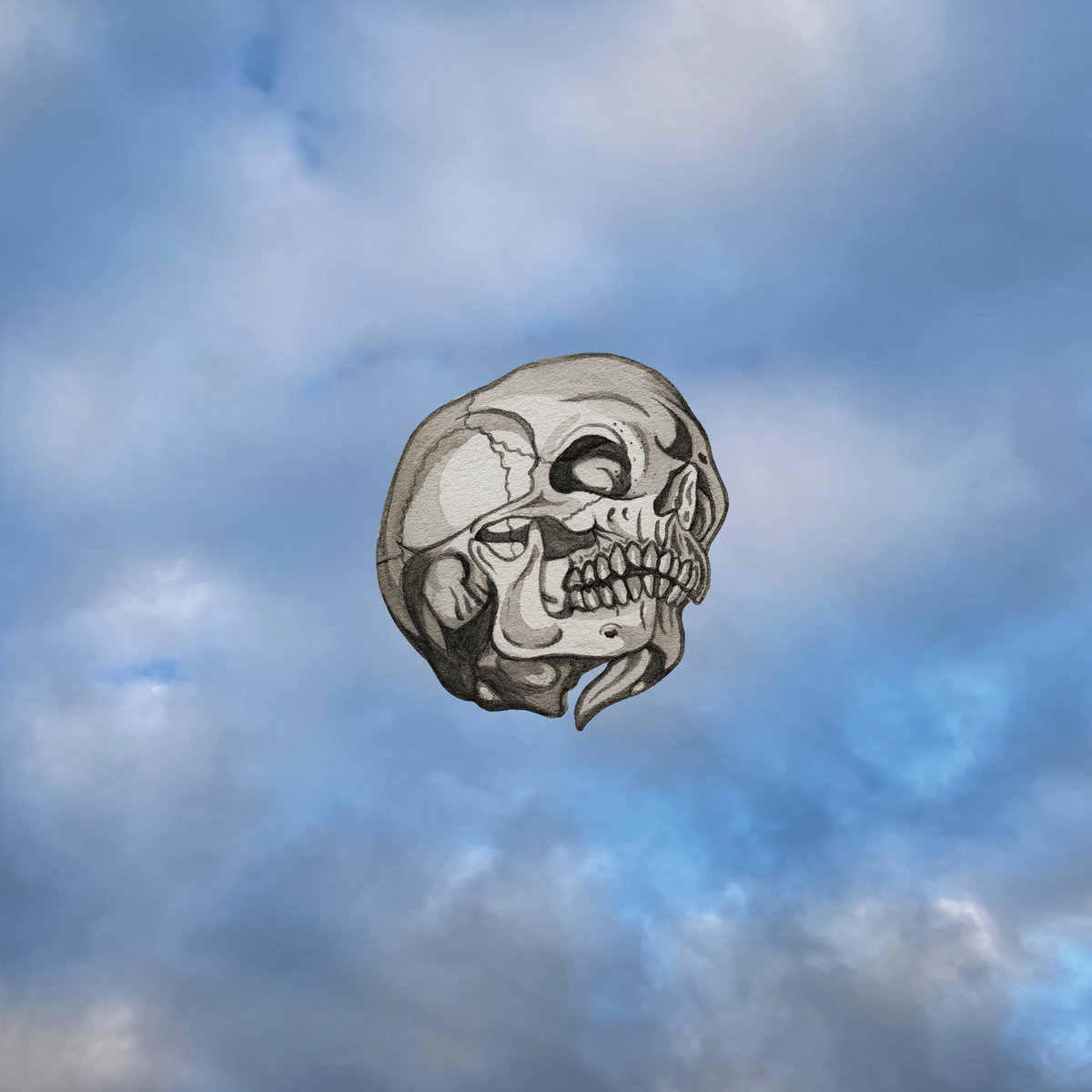
Following his recovery and touring with Foxwarren, Kissick completed the record with the help of those closest to him. His brother and Foxwarren bandmate Avery Kissick contributed drums and arrangement ideas, while Saskatchewan musicians Jakob Bjornson added double bass and Ian Cameron contributed pedal steel. The album’s striking cover artwork, created by his sister Emily Hamilton, depicts a skull pasted onto a beautiful sky—a fitting visual metaphor for the existential anxiety that inspired these recordings.
In a world that often feels impossibly loud, Character Actor offers something increasingly rare: space to pause, listen closely, and find beauty amid uncertainty.