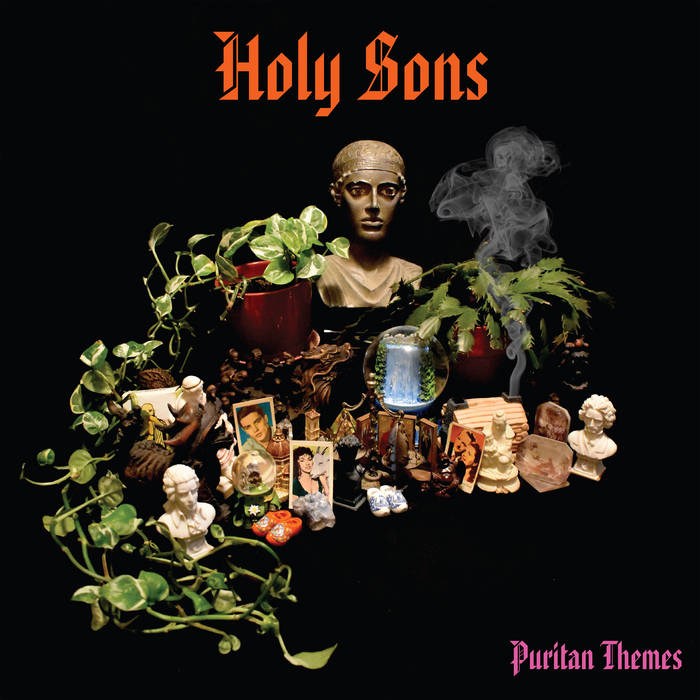
Holy Sons "Puritan Themes"
Holy Sons is the solo project of Emil Amos (Grails, Om, Lilacs & Champagne). Puritan Themes is his 17th album, his 4th for Thrill Jockey Records and a tentpole album in his wide-ranging output. Puritan Themes’ relaxed aura is focused through a laid-back west coast 70’s lens, injecting Amos’ wry wit and tinges of darkness into lush songs that drift like dreamy, featherlight clouds.
Puritan Themes is a record that knowingly, barely fits into the modern world. When mixing the record in Chicago throughout summer of 2025, every day Amos would skate through Douglass Park listening to 70’s AM radio and doze off at night to early Bee Gees interviews. The earliest concept of the record was based around the track “Chain Gang”. Amos explains: “It’s an imaginary take on if Cat Stevens had smoked a ton of salvia and taken a much darker route within the world of dense, story-telling songwriting.” An existential fairy tale built off of American legends like Cool Hand Luke and John Henry, ‘Chain Gang’ is the heart of the political stance of Puritan Themes, recalling Guy Debord’s Society of the Spectacle with its final lines ‘A thousand idiot’s eyes are focused on the one diseased prize’. The track “Raw & Disfigured” borrows its name from the last Thrill Jockey Holy Sons record, in a referential move that’s stolen from how Led Zeppelin separated the track “Houses of the Holy” from the record of the same name (again harkening back to 70’s lore).
Everything is recorded, performed and mixed by Amos. Amos has been a beacon in the world of home-production for decades now, a progenitor and godfather of modern bedroom-pop and one-man-orchestras, making dense, organic sounding arrangements primarily on his own. His free-wheeling, adventurous spirit as a producer mirrors his cerebral and sprawling landmark podcast “Drifter’s Sympathy,” which feels inexorably tied to his practice of home recording. The album features Kelly Pratt (David Byrne, M Ward) playing and arranging the horns on “Chain Gang”. In addition to playing guitar and drums which Amos is most known for playing live, Puritan Themes features all the staple instruments of Holy Sons: mellotron, lap steel, various drum machines and the Akai MPC sampler. Notable is Amos’ obsessive and unusual approach to mixing, repeatedly bouncing down instruments and applying pitch-bending or re-rooming plug-ins that obscure the original sound sources.
Puritan Themes steps out of time and reaches back to 70’s sounds in order to escape the machinations of the current world. The compositions return to a more innocent ground floor when listeners had the time to sit with an entire album and let the lyrics sink in. Tune in and Tune out.
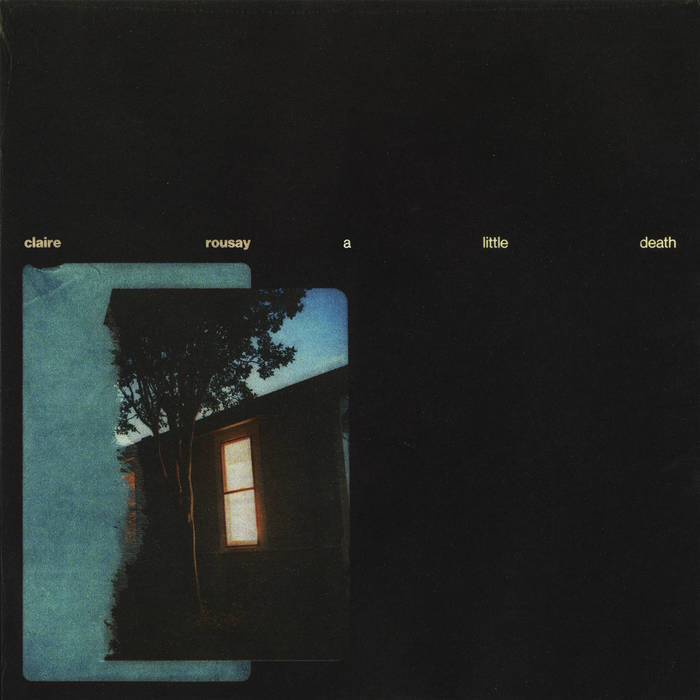
Claire Rousay "A Little Death"
claire rousay’s music cascades from a well of documented experience, reflections of the past that compose the present. A prolific multi- instrumentalist, producer, and composer, rousay gracefully crafts boundaryless music. From her frequent and acclaimed collaborations to her film scoring, from her own compositions to her solo pop work, rousay’s music is delicate yet powerful, carefully constructed with a casual intimacy. rousay collages a wealth of found sounds and field recordings with earthy strings, stately piano, and processed instrumentation, all of which trace the outlines of memories and distinct impressions and create a complex constellation of feeling. a little death illustrates rousay’s ability to sculpt sonic microcosms from disparate raw materials, worlds where sound and feeling are one in the same. Shaped around field recordings she captured at dusk, the album is an homage to the gentle drifts and lurking disquiet of twilight.
The process of composing a little death felt like a homecoming for rousay after the more pop-oriented song forms of 2024’s sentiment. “sentiment was a different way of working that helped refresh my music making habits and usual flow,” rousay notes. “This record is a return to what I see as my core solo practice, a re-dedication to those methods of working which I’ve found most align with what I envision my music or sound to be.” Intended as a part of a trilogy along with a heavenly touch and a softer focus, the pieces on a little death sprout from a wellspring of tactile samples and granularly processed sounds. The use of sounds recorded from her life outside of the studio remains a throughline in her work. While the previous two albums used field recordings as the primary sound source or central figure in the compositions, here they act more as springboards, timbrally intertwining with live instruments like additional voices in a chamber ensemble. Captured as daylight fades into memory, the sounds give a subtler diaristic impression, the recordings occupying a more elemental space which give moments of absolute clarity a shine in the dim gloaming.
rousay’s practice on a little death highlights her sensitivity to nuance, as moments of chance are deftly interwoven into compositions with intent. The album playfully combines elements with varied recording fidelities, rousay adding new layers of textural complexity with the juxtaposition of found sounds, melody and harmony. “Blending fidelities comes from how I started making music on my own,” says rousay. “I started recording myself as a teenager, and I needed two microphones and I had one real one and then my laptop. I’d use them both and find a way to make them work together. These pieces share a lineage with that, using what’s available.” Bristling electronics and violin harmonics are dotted by fidgety rustlings on “conditional love”. The metallic grinding and percussive clangs of “just”, featuring M. Sage, breathe sparks into droning clarinets and chordal piano figures. Recent and frequent collaborators like more eaze, Gretchen Korsmo, Andrew Weathers, and Alex Cunningham act as a make-shift sample library across the record, rousay manipulating performances old and new into elements that fit into her orchestrations. The lonesome acoustic guitars rousay employs on “night one” and “somewhat burdensome” recall the pop forms of sentiment but live deeper in the fabric of her compositions, woven by her dynamic arrangements.
rousay’s music has evolved from confessional to conversational and
excavates the rich emotional essence of each passage. Her work as both archivist and adept arranger and orchestrator merge sublimely into deeply honest and engrossing music. The pieces of a little death are charged with rousay’s voice while giving space for new interpretations and contexts. The shifting atmospheres act as fragments of perspective, each ecstatic instance opening itself to new perceptions. On a little death, rousay’s blend of pop sensibility and compositional acumen turn abstracted sounds into tangible feelings, its warm, glimmering glow coalescing sensually with the darkness.
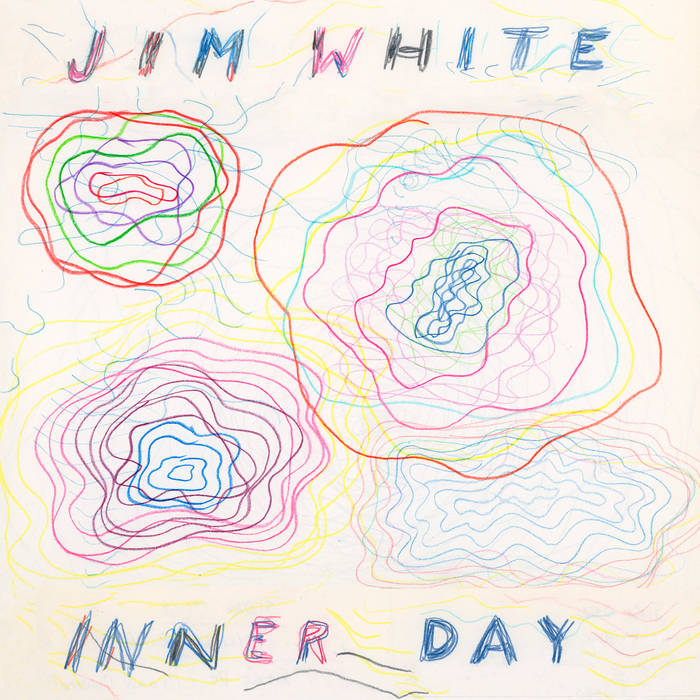
Jim White "Inner Day"
For his second solo album, master drummer Jim White travels further into expressionist landscapes of private meditation; his vehicle, an evocative duet of keyboards and drums alongside his debut as a vocalist. Translating his formidable percussive intuitions through this dialogue has given Jim a fresh compositional voice. Inner Day is like a state of nature, evoking peace and tension, rest and disquiet, all aloft on the wind of new discovery.
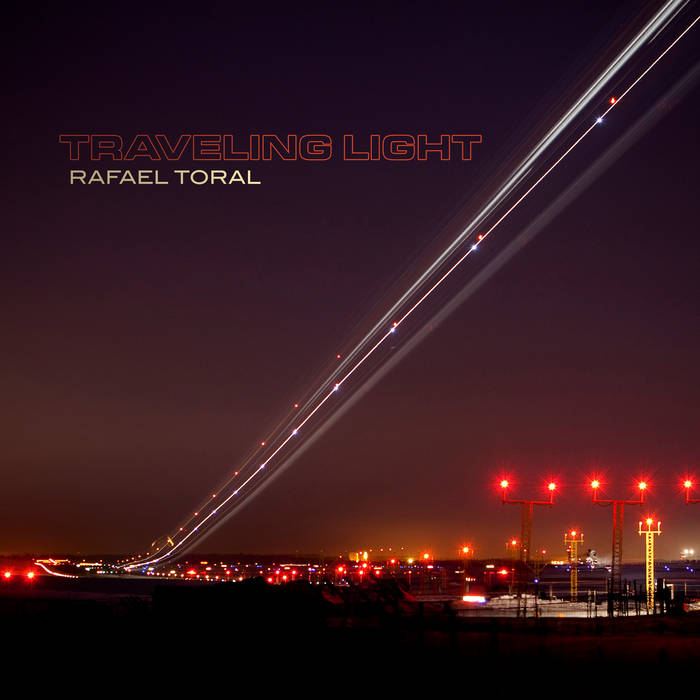
Rafael Toral "Traveling Light"
From out of the dark, the crackle of feed back birdsong signals a return to the land of sound environments exclusive to the music of Rafael Toral. A year and a half after his epochal electric guitar album, Spectral Evolution, Traveling Light finds him sharpening his focus, moving boldly from abstract forms to concrete compositions in the form of a set of jazz standards.
Based on Toral’s discography, this may seem an unlikely endeavor, but happily, Traveling Light transpires to be one of the major accomplishments in his long history, expressing these songs on their own terms through the unique listening lens of his music. It’s nearly a century since the innovation that electrified the guitar, almost a century since the era of songs like “Easy Living” and “Body and Soul.” Since then, guitars and songs have been played hundreds of different ways by thousands of diverse individuals. After a century of progress, they probably should sound like something else again! And they do, as Toral sidesteps the traditional logic of how to play a song, moving outside the framework with which one would expect a standard to be treated.
Three decades ago, in the early years of his practice, Toral used the guitar as a generator, to create discreet texture and droning tones. Later, he abandoned the guitar entirely, focusing on self-made electronics to render his music, and the silence from which it came, with a post-free jazz perspective. For the music of Spectral Evolution and Traveling Light, Toral has combined his methodologies, radically expanding the space within their harmonies with his self-made machines, while engaging directly with his instrument and the chords of the material. The result is a listening experience of these standards, that remains “in the tradition,” even as the elongated harmonies seem to alter time such that, as Toral notes, “the chords become events on their own.” At points, the long tones animate the sacred ennui of liturgic music, the choir or the organ standing in for silent contemplation while rumbling the ground beneath our feet. Another echo of the concentric circling of music in time…
Further time-loops emerge throughout the duration of Traveling Light. The simple, organic quality of these reshaped songs and sounds, arranged by Toral for guitar with sine waves, feedback and bass guitar forms a proxy orchestra of sorts! One of Toral’s self-made devices incorporates a theremin — another near-century old innovation in electronics conceived for use in classical music — to modulate feedback melodies here. Meanwhile, this altered space is visited by canonical jazz sounds on four tracks, as clarinetist José Bruno Parrinha, tenor saxophonist Rodrigo Amado, flügelhorn player Yaw Tembe and flautist Clara Saleiro each guest on one song. In this new landscape, history and tradition are exemplified, like a toast to Earth cultures made on the alien terrain of Mars.
In every contour of Traveling Light’s path — arrangement, improvisation and production — the spring of the old pours through the new in an unstoppable flow. This is the sound of life, a nexus point for the music of the last century and the music ever unfurling toward the far horizons of the next century.